
Review: A Christchurch Carol
It’s pretty much a full house tonight for the opening of the festive season’s comedy show A Christchurch Carol at Little Andromeda. Written by Gregory Cooper and directed by Dan Bain, this rendition of the Charles Dickens classic stars three well-known, excellent local actors: James Kupa, Tom Eason and Reylene-Rose Hilaga. Given its pedigree, it’s fair to say I am expecting clever lines, punchy delivery and sheer brilliance on stage. That’s not asking too much from Comedy Santa, surely?
Like a child who has been on the ‘good’ list all year, I’m not disappointed.
This show is hilarious.
First published on Theatreview, 5 December 2025
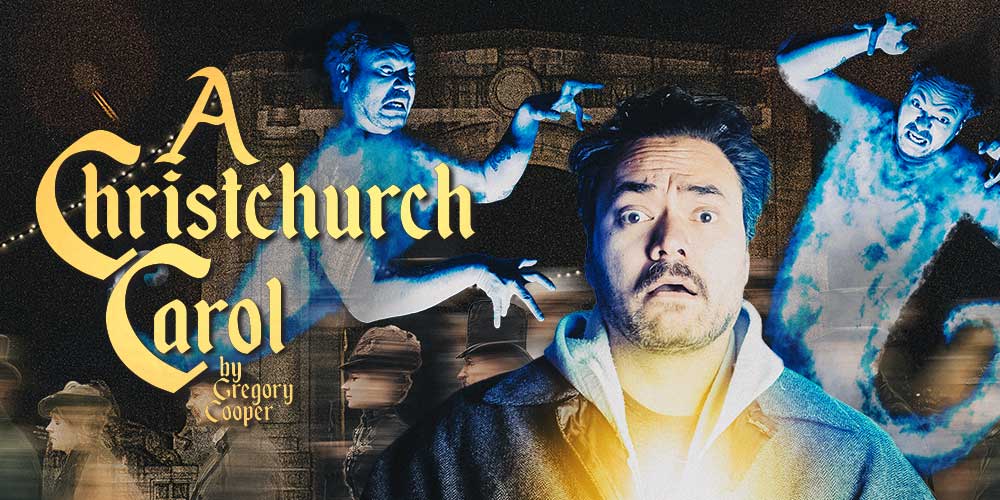
You know the outline, of course – the ghosts, the evil Scrooge, the sweet but sickly Tiny Tim – only this time we are not in London anymore. Welcome to Cambridge Terrace, in one of the city’s Dirty Thirty (the earthquake-damaged buildings that should have been pulled down by now, but still stink up the city like decaying teeth in an otherwise sensational smile).
It is both a trip down memory lane and totally current, as to be expected from the Ghosts of Christmas Past, Present and Yet to Be. Under Bain’s direction, the three actors complement each other’s styles superbly: Kupa’s mobile facial features and intense presence, Hilaga’s perfectly on-point vocal inflections and eyebrow raises, and Eason’s often deadpan delivery (even when naked except for a be-ribboned box). All work perfectly together, like a Christmas figgy pudding, custard and cracker combo.
As they take us back to the Christchurch of yesteryear, I laugh out loud at the references that bring back memories, and to the situations we are currently living through – the dried ice of the Palladium (or rather, the “let’s-get-laid-ium”), the ongoing Christchurch suburban class rivalry, the unaffordability of dairy and its consequent bone-cracking consequences. Local personalities pop up throughout the story as we are treated to everything from a Santa with prostate exam-ready digits to highly mimicable dance moves.
The music, under direction of Michael Bell, includes several songs including a singalong of ‘We Wish You a Merry Christmas’ – delivered under the very real threat (for non-participants) of being hauled on stage – and Men Without Hats’ ‘Safety Dance’ (I fear I will hear the echoes of this song long after this show is over, and I know I will be using some of the dance moves😉).
Lighting by James Shera adds the right mix of drama and melodrama to the proceedings and the costumes are suitably versatile, unsubtle and laughable in their own right.
As ‘Big Swinging Dickens’ himself once said, “There is nothing in the world so irresistibly contagious as laughter and good humour” – and there is much of both to be had in the theatre tonight.
Please sir, can I have some more?
Review: Brown Fala: A Master of None
I’ll start at the end.
At the close of the performance, Lila (LJ) Crichton, the creator of A Master of None: Brown Fala, encourages us to have conversations. This show holds the fala mat as its central motif – it is a literal place around which conversation takes place in many Samoan homes. In this story, the fala is a metaphor for honest connection and, perhaps fittingly, for this palangi/European attending a performance designed primarily for Samoan audiences, Brown Fala is also stimulating conversations and learning about cultures.
I am grateful to be able to tag along with Talia-Rae Mavaega and Jake Tupu, two Samoan theatre practitioners based here in Ōtautahi, who share with me an understanding of the significance of the fala and elements of Samoan culture inherent to the story that I would otherwise miss or misunderstand.
First published on Theatreview, 4 November 2025
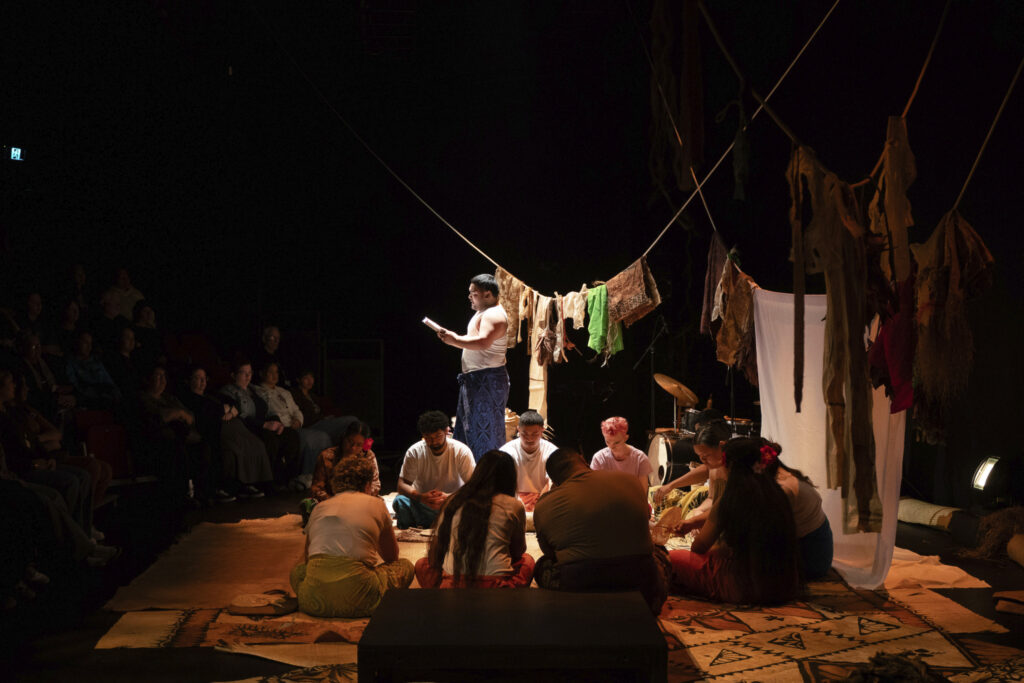
In an opening monologue infused with emotion, Crichton – the writer, director and main performer – explains in Samoan the process of making a fala: the picking, drying and preparation of leaves, which are then woven into the fala mat. The fala is, the show summary says, “a woven mat, passed between hands, across generations. It carries memory, it speaks of care, and it holds space for ceremony, conflict, grief and celebration.”
Jake has also explained to me that fala were valued items of gifting and trade, and that they have played a more crucial role in relationships and community. A ‘wrongdoer’ would sit outside the home of the wronged, covered in their fala as a sign of repentance or shame, and seek forgiveness. Forgiveness came when – or if – the wronged person lifted the fala and all that it represented.
This is the context in which A Master of None: Brown Fala unfolds. Musicians playing both traditional Samoan and modern instruments form a frame around the stage. The story unfolds through music and song, metaphor and allegory, performance and dance. As with the instruments, the storytelling techniques blend both Samoan tikanga and European convention.
As the performance progresses, the ‘musicians’ become active participants in the story. No performer here has only one assigned role; they are members of the onstage community of friends and family.
From the outset, the singing, at first soft and enticing, is harmonious and engaging, and it rises to moments of incredible power as the performers create a vibrant chorus. The emotion is palpable and embodied on an almost cellular level in the expressive voices and the fluidity of the carefully choreographed movement. This brings a depth of emotion to the story that words alone simply could not accomplish.
A small frustration for me is that some of the action takes place at the front edge of the performance space; in fact, this is the area in which the fala is laid at the start of the performance. Being only a few rows back, it is still impossible to see any action here as the performance edge is obscured by the theatre seats which abut it. I find myself leaning forward a lot to see what I might be missing, and imagine that this is even more difficult for those many rows behind me.
I also confess to being a little confused by parts of the story. I am not sure if this is because of the fusion of ‘in the moment’ storytelling with metaphor and myth, or that I am literally missing something in translation (not all, but parts of the performance, are in Samoan), but I still receive and understand the very powerful messages at this story’s core.
At heart, it’s a story common to every culture throughout the world: a relationship which becomes tainted by violence, deceit and shame. This is partly told through the traditional Samoan myth of Sina and the Eel (and echoed in a reference to the Adam and Eve creation story), but in this telling, having won Sina – the object of his affection – the male protagonist’s own hurt and anger leads him to mistreat and abuse her, crushing the beautiful spirit that drew him to her. (Characters are not named and I am therefore unable to identify individual performers.)
As he places the fala over her, he gives her the shame of this experience, smothering her song and joy. She diminishes into herself while he revels in his ‘victory’ over her. But his revelry is not heartfelt – externalising his anger has not cured him of it.
It is Sina’s friends and family who help her remove the fala and all that it symbolises. As she emerges, and becomes clad instead in traditional Samoan dress, she heals, recovering her mana and her power. It is as if she grows taller. She can then place the shame where it belongs – over her abuser.
But this is not a story of retribution. It is a story of reconciliation – between people, and within the conflicted elements of ourselves. Forgiveness is given, and as the weaving of a new fala takes place, all are welcome to be part of this opportunity for connection, conversation and honesty.
Jake and Talia Rae explain to me that the weaving of that fala is not just about the literal weaving of the materials; it also reflects what in Samoan is called the vā – the space in between. As the fala is woven, it captures the vā, both the good and not so good; it should all be seen and accepted. The fala may have imperfections, but to deny or try to hide them diminishes the fala and the stories it carries. Which brings us back to where we began: courageous conversations, and the power of healing and unity that comes when we embrace the vā.
Review: Wolf Play
I confess to not knowing much about the play I’m seeing tonight, not helped by The Court Theatre’s obscure show blurb: “an American father, Peter, ‘un-adopts’ a boy over the internet, fulfilling Robin’s dream of becoming a mum.” Huh?
Thank you, Google, for explaining the actual plot. There are online forums in which people who have adopted foreign children can relinquish them, offering them for adoption to others. It is to one such forum that Peter turns to give up (or rather, sell) Peter Junior, aka Wolf (aka Jeenu), when domestic life gets complicated and difficult. Robin, who is desperate for a child, joins this forum and there finds Wolf. Her motherhood dream can be fulfilled, and for a reasonable price.
First published on Theatreview, 22 October 2025

Delivery is completed, the paperwork assigned, and the deal is done. Four stars; would trade again. Yes, this is a world where consumerism might seem to have gone crazy, but this is our world – the show programme tells us that forums like this exist.
Morality is, of course, a grey scale, and Wolf Play – written by Hansol Jung and directed by Kathleen Burns – reflects that. All four of the adult characters have redeeming aspects, some being more selfless or less bigoted, but the two main adult characters of Robin and Peter are still people who are willing to trade a child on the internet, and to do so with disregard for those they already claim to love.
In the midst of all this confusion is a six-year-old, abandoned/rehomed twice – the first time as a child from Korea and now, for the second time, when he becomes inconvenient. His ‘father’, Peter (an excellently emotionally conflicted Andrew Todd), proclaims to love him, and maybe we can believe him, but he is simply inadequate as parent and partner because he just can’t/won’t stand up for what he really wants. Wolf is not the only one who suffers because of his inadequacy.
Wolf, embodied as a faceless mannequin doll, is brought to passionate life brilliantly by Reylene Rose Hilaga. S/he is at turns humorous, raging, conspiratory, but always engaging, drawing you into Wolf’s story and confidence with intensity. Hilaga perfectly captures the energy, enthusiasm, earnestness and raw emotion of a six-year-old trying to protect themselves, a safe unit of one.
Wolf has lost his birth pack, and his new pack has rejected him – but wolves can survive almost anything, as he reminds us (and himself) throughout the play. Wolf 100% rejects attempts to be pulled into this new pack, yet he desperately needs to belong. Grudgingly, gradually, he begins to connect with another independent wolf – Robin’s wife, Ash (Ray Shipley, in turns inflexible and stand-offish, and then capturing the beauty of the law of attraction at work). Ash has fought hard, and literally still is, for their own place; they choose their battles carefully, making little attempt to woo Wolf, simply accepting Wolf for who and what he is.
Emma Katene imbues desperate mother Robin with a somewhat manic energy, and Nic Kyle is the apparently relaxed yet incredibly intense brother, Ryan, whose love for family is counterbalanced and undermined by conservative conditioning.
The main action is contained within a small, simple and cleverly utilised set (designed by Hannah McDougall). Action pieces happen within the domestic sets to the sides, while thoughts and monologues take place centre stage, allowing engagement with the audience that is literally up-close and personal in The Court Theatre’s Wakefield Family Front Room.
The multiple independent scenes that happen concurrently in the kitchen are smoothly done, providing maximum use of the small set and keeping the plot moving swiftly. Well-pitched lighting (Giles Tanner) and sound accents (Dan Bain) focus our attention and link the action of the central story, with use of a subtle boxing match sound motif – brought to life fully in an actual boxing match. Everyone here is figuratively fighting for their life or, at least, their way of living their life – Wolf most of all.
There are many big issues in this play, and not just in the core scenario. Who decides what constitutes a fit parent? Do kids need a cookie-cutter nuclear family to be well and balanced? What is the family in modern society? Is the pack you find better than the pack you are born into? How can you ever find real security when you rely on other people.
Is it better to be a lone wolf after all?
Amongst all of these questions, there is also a lot of laughter; I have not expected to laugh out loud quite so much as I do. There are also quiet and, frankly, uncomfortable moments of contemplation, so I’ll admit to a few tears too.
As Wolf reminds us, sometimes there are ‘Oh, no’ moments in a story, but we hold on, hoping for the ‘Phew’ moment that might come after. I won’t tell you if you will walk away with an ‘Oh no’ or a ‘Phew’ from Wolf Play; you’ll have to see it for yourself, and I recommend that you do.
Wolf Play has surprised and deeply impressed me; I’m sure it will do the same for you.
Review: Love; Mum
The plotline may be about five Pasifika women who meet as new mothers, but I can promise you that you don’t have to be Pasifika, a mother, or even a woman for this show to resonate.
Yes, it’s about motherhood, but for me, it is really about identity and connection, and the way our journeys lead us to question, or solidify, both.
Joy (writer, director and producer Sela Faletolu-Fasi), her sister Finau (Tonia Noa Siaosi), Racheal (Bianca Seinafo-Tuilaepa), Judah (Taleta Maree) and Lalelei (Josephine Mavaega) first meet in Mums Anonymous, a support group echoing the 12-step groups which help people overcome or manage a lifelong issue – in this case, its motherhood.
First published on Theatreview, 10 March 2025

Josephine Mavaega (L), Taleta Maree (C), Tonia Noa Siaosi (2nd from R) and Sela Faletolu-Fasi (R). The character of Racheal was played by Bianca Seinafo-Tuilaepa (a different actor is pictured)
The intimacy of the setting is enhanced by a small audience on the night I attend. The characters introduce themselves within a sparse set, comprised of just five chairs and a tapa cloth, and it’s abundantly clear from the offset that what drives each woman and, vitally, how they see themselves, leads to very different mothering styles.
Finau is a woman very much connected to her professional identity; it is what has defined her and given her purpose. Her sister Joy is, frankly, a badass mama bear who will brook no interference with her family. Judah is an influencer who lives life online, Lalelei grapples with self-doubt, and wants to wrap her children up in cotton wool and Rachel believes that everything happens for a reason, and that is God’s reason.
Whether they realise it nor not, the experiences these women have had and the influences in their lives will, of course, be reflected in how they parent their children. They each do their best with what (and who) they have available to them. Sometimes, they fall short of their own expectations.
Having met the characters, we go back to when they first met as new mothers, their babies just a few months old. The play takes us through various stages as their children grow, but we never meet the children – this is a play about the women who mother them. The vital role of ‘mother’ does not take away from the fact that these women are individuals first – people, not just parents.
Over the years Lalelei, Racheal, Judah, Joy and Finau become fast friends. They support, challenge and cheerlead for each other, and each other’s children. This is the village that raises a child.
As in real life, there’s conflict here too, both between the women, and off-stage. Joy is living with and struggling to survive an abusive relationship. Faletolu-Fasi gives a realistic and powerful portrayal of the way in which psychological and emotional violence seeps into a person’s entire being, and the ways in which it then seeps out all around them. Noa Siaosi as Finau captures the clash of love and exasperation that anyone who has tried to help someone, but had their good advice rejected, will understand.
Each of the five women has her struggles and joys, and these friends support each other and their children. Whether they are dancing, drinking, or singing in support of Lalelei’s stage frightened son, such was the familiarity of the scenes and characters that I felt I wanted to join in. Anyone who has had a deep friendship, within or outside of their family, knows this connection; if we are lucky, we have felt it ourselves.
When the tension becomes full-blown, it takes me by surprise; it is visceral and I feel it. The anger, pain and grief are beautifully captured and conveyed, as is the helplessness of the bystanders.
I really enjoyed this play. I laughed a lot. I cried a lot too. Each of these five actors was wonderful and I give them full credit for taking me on such an amazing journey in just 60 minutes. (Side note, these women have beautiful voices and need to do a musical to sing together!)
So, yes, this is a play about motherhood and what that means to different people, but it’s also a play about individuals – how what has shaped them and continues to drive them will pass through them, to all of the people they love, including the ones they love the most. Choose what baggage you carry with you wisely.
For me, this play really was a celebration of friendship. This is the tribe we find and choose to share our journey with us, even when partners leave us or our children move on to create their own story. This story was so familiar to me and, if you have ever experienced the joy and pain of human connection, it will be familiar to you too.
Love; Mum plays at Little Andromeda until 22 March and then moves to Auckland.
Friday night at the James Hay Theatre and it looks like a full house (Bingo! 😊 I couldn’t resist!)
We’re here to see the legend that is Keith ‘The Numbers’ Preene, have a few laughs and maybe even win a prize – which of course you must go on-stage to collect. What can possibly go wrong?
We’re all handed a bingo card as we enter. Many people have not bought a pen, not expecting, perhaps, that there will actually be bingo (or maybe wisely not wanting to expose themselves to the risks of ‘audience participation’).
Some of us stand for the national anthem (leaving others confused and/or still seated, but Keith is a product of – and still in – the 1970s) and the 20th Century Fox theme. Enter the man himself. Dodgy suit, dodgy wig, dodgy glasses, but exuding charm and panache.
First published on Theatreview, 1 February 2025

Keith (Shay Horay) is here for a conversation with his friends, the audience. He’s going to tell a few jokes, have a few laughs, and let them see a little bit of the life of the man behind the famous calendar shots. Along the way we’re treated to a blend of old-fashioned bingo interspersed with courier deliveries (aka Temu aka Gavin, played by Jonny Brugh (What we Do in the Shadows (movie) and the brilliant series, Educators), a plug for Keith’s contemporary dance studio (with an unforgettably costumed demo) and anecdotes from the great man’s life.
Of course, some of the great laughs come from witnessing the discomfort of others as people who have scored a ‘line’ come onstage to collect a prize (a Keith Preene 2025 calendar); I’m glad my luck is not in tonight. Graciously embracing the audience participation that is thrust upon her is audience member Mel, who is called up to be Keith’s glamorous assistant for the second half of the show. Full credit to her, she even necks a Rheineck – that’s dedication to realism.
Physically the show is split between two onstage spaces – the ‘presentation’ side and, divided by an invisible but very ‘real’ wall, Keith’s comfortable Rolleston-based 1970s home. I recognise far too many prop elements from this era for my comfort.
The lighting and sound effects add to the night, with spots following Keith (or not), in order to underpin moments of comedy, and a great use of dual mics as Keith the man switches from his headpiece to his professional Bingo Caller handheld.
As lines are called, calendars disbursed and people mildly mocked, it’s clear that this audience of friends have got what they came for – laughs. If some of the jokes are already well known, I can forgive Keith, as his embellished storytelling and infectious giggle still provide plenty of humour.
For me (but not just for me, judging by the reaction), the absolute highlight is his (near) exit from the stage. I am literally doubled up with laughter as Horay puts his body on the line in the name of comedy. Absolutely hilarious.
If I had one quibble, it’s that some of the unscripted dialogue between Horay and Brugh goes a little long or loses its way, especially at the end of the show, detracting from the momentum.
Keith ‘the Numbers’ Preene is doling himself out to only one show during the World Buskers Festival, but if your numbers weren’t in last night, maybe you can catch him at another bingo hall soon. If you can, he’s worth spending some time with. And you just might pick up a few dance moves too.
I arrive to see Dancing Queen: A Tribute to ABBA as a bit of a sceptic. When ABBA hit the airwaves, I was in primary school. Our class was split into Team ABBA and Team Bay City Rollers (when I say split, there were only 10 of us, and only about six cared about pop music, so…)
I was Bay City Rollers all the way.
But you can’t deny the power of ABBA. They have lasted longer than BCR, had more hits, and inspired inter-generational dedication. All of that is quite clear tonight.
First published on Theatreview, 30 November 2024

The sequins, singing and high energy are dazzling, and that’s just the audience pre-show. It’s clear that people are here to Party, helped by a mix of excellent pre-show tunes I have to say. My ‘date’ has cancelled late, so I sit alone, a little apprehensive that all this enthusiasm will lead to unspoken peer pressure to dance.
I am not sure of what to expect of this show, but the Showtime blurb tells me that this isn’t just a cover band; rather, a “full-scale concert production”. There are – naturally – four performers, who ‘act’ as the stars of ABBA – Agnetha, Frida, Benny and Bjorn. They are supported by small band of bass, drums, sax and keyboard (both performed by the same guy – his sax playing is amazing), and a female singer. It’s a tight crew and they provide superb support to ‘ABBA’.
In front of them tonight is a large, enthusiastic crowd and whilst there are many people born in the 60s, forget your stereotypes. There are people of every age and stage here, all of whom no doubt grew up with ABBA tunes – the original band, Muriel’s Wedding or Mama Mia the Musical. The appeal is wide, and the love and enthusiasm is clearly deep.
By song three (‘SOS’), people are up and dancing. The pressure is on. By the time ‘Dancing Queen’ comes on several tune later, the band is encouraging everyone to their feet, where they remain for most of the remaining show.
Nothing misses a beat, ever. The ‘band’ deliver a well-rehearsed, well-timed and well-delivered performance. I find the scripted performer patter a bit cheesy, but I try to remember that this is a show – it’s not an off-the-cuff performance – and, regardless, it works. The ABBA performers engage the audience from the first time they speak (in Swedish accents) and the audience responds loudly and enthusiastically. Even the guy running the lighting deck is getting into the vibe.
A simple set, with a drum kit on a raised rear centre stage, and mikes and ‘Benny’s’ white piano up front, leave space for the band to be literally centre stage. An AV screen provides a backdrop, featuring abstract AV effects a la the opening credits of Ready to Roll (another trip down nostalgia lane), while the lighting is colourful and focusses, naturally on the ‘band’. Of those, we all know the main stars are ‘Frida’ and ‘Agnetha’. Colourful spotlights, occasional intense and throbbing uplights, and disco ball effects all add to the party vibe.
The costumes are familiar from the key moments of ABBA’s life (white satin mini dresses, big sleeves, pantsuit and platforms) and the choreography is reminiscent of ABBA, the originals. It’s obvious that this group have done these routines many, many times. They are smooth with a capital S.
The crowd is here for a good time and are totally giving themselves over to the vibe of ‘ABBA’ being onstage, which is precisely the point of this show. It takes me back to being a kid when they were on the airwaves. I remember songs that I had forgotten, and lyrics that are locked deep in the archive of my mind that come tumbling out of my mouth, although I haven’t thought about them for years.
It also surprises me just how many absolute banger hits ABBA had, and I had honestly forgotten how much fun many of them were. I defy anyone surrounded by 1,000+ people singing ‘Dancing Queen’ not to feel the urge to perform a point and sweep move.
All the hits are here, and they are performed perfectly. ‘Agnetha’ and ‘Frida’ have incredible voices which do absolute justice to every song, and ‘Bjorn’ and ‘Benny’ are great frames to the women, as well as being authentically talented musicians.
Showtime NZ have got a winner here. These are consummate performers who bring the goods – a pop/rock production that delivers a joyous escape, as witnessed by the smiles that are everywhere as people sing and walk/sashay out.
And do I get up and dance?
Yes, I do. And you will too.
Tea with The Topp Twins
It’s Christchurch Pride Week and, to celebrate, The Court Theatre has created a Rainbow Theatre Weekend – a multicoloured rainbow of performances ranging from nude play readings to children’s story time.
The show that catches my immediate eye – and that collective eyes of about 380 other people’s – is that by “NZ Icons,” Dames Jools and Lynda Topp.
Tea and freshly made scones are on offer in a buzzing foyer when my friend and I arrive for the 11am “retirement home time slot” appointment with their Dame-ships. We start a little late, but I can tell you that there is a palpable vibration of expectation and happiness in the auditorium. MC Lana Searle invites us to stand and dance Jools and Lynda onto the stage and, truly, the crowd goes wild. Genuine love and excitement flows from the audience and onto the stage.
The Topp Twins have been part of the New Zealand entertainment scene for over 40 years, creating a unique blend of humour, country music, character skits, yodelling and political passion.
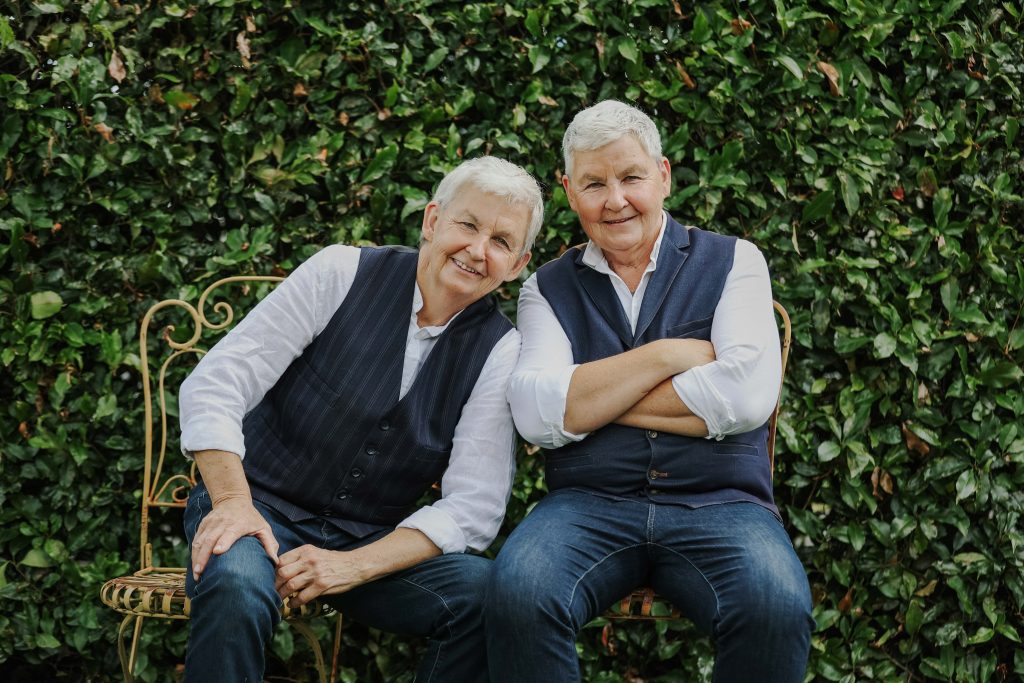
Image Credit: Kiwibank New Zealander of the Year Awards 2023
Today they are here to talk about their lives. Seventy minutes is not nearly enough for these natural born storytellers. Searle guides the conversation but, in truth, these brilliant women have no trouble talking and engaging the audience. They riff off and pass between each other with a familiarity that comes both from being identical twins and long-term performing partners.
These self-proclaimed ‘political lesbians, radicals, entertainers’ have a little bit of everything to offer us today. Of course, there are songs, featuring the beautiful harmonising, and the yodelling. There is obvious sisterly love plus many, many laughs, and the anecdotes – we learn a lot about their childhood (and even the intra-womb collusion which kept their ‘twinness’ a secret until birth), the influence of their beloved mum, the party experiences of their youth in Huntly, and entertaining (then) Prince Charles.
When Searle asks them if they realise their impact on NZ culture, they talk about their passionate involvement in many points of cultural and political change – protests in favour of making NZ nuclear Free; the 1981 Springbok tour; the Bastion Point occupations; and the Homosexual Law Reform. As openly lesbian women since the seventies, they are passionate about inclusion and equality and their audience is a visual demonstration (by way of shows of hands) of that diversity and inclusion. People are here simply to appreciate the talents of other people – no labels or judgements; that’s the point.
Over their long career The Topp Twins have used their voice and status to make change about the things that mattered to them, and to many others. But they are also part of our culture in the most basic of ways – so many of us can see ourselves, and familiar experiences, reflected by the stories Lynda and Jools tell, and the songs they sing. There is no pretension from the Topps, and no doubt that is part of the reason they are so beloved. They are talented comedians and musicians, but they also represent something we recognise, or wish to believe, is essentially Kiwi – a no bullshit, laugh at yourself and tell it like it is approach.
This show was truly like coming home, for the best kind of homecoming – the chatty catchup, reminisces and laughs with people you know so well.
The “Untouchable Girls” have been touched by life, being forced to take a hiatus from performing and even seeing each other due to the ‘three Cs – Covid, cancer and chemotherapy’ in 2021. That fight is not fully over – Jools has ongoing preventive monthly treatments – but they are getting back out in the public eye and are thinking about going planning a concert each month in the cities around the country.
Trust me, if they do, go and see them. Welcome each other home.
I’d seen Adam Rennie perform once before, when he starred in Hedwig and the Angry Inch at the Court Theatre in 2019. That performance left such an impression on me that I knew without doubt that I would be going to see him again whenever I could. So, thank you, Court Theatre, for bringing Rennie back to Ōtautahi.
For 70 minutes on a Sunday night in Christchurch he entertains us with a cabaret style show in which we’ve been promised a “whirlwind tour of all the queerness, joy and, quite frankly, pain that comes with performing some of the biggest roles in musical theatre history.” I’m expecting big things. I get all of them, and more.
Opening the show was ‘The Origins of Love’ from Hedwig. This song, sung by a backlit Rennie as the stick-figured picture story unfolds across a screen
First published on Theatreview, 27 March 2024

at stage front, set the expectations of all that was to come – poignant lyrics, powerhouse vocals, and mesmerising, sequinned showmanship.
Rennie shares key moments of both his professional and personal journey through his song choices and conversations with the audience. He introduces us to the nine-year-old boy jumping on the trampoline in speedos and an oversized tee shirt, to…well, the grown man, finishing his performance an hour later in the equivalent of speedos and an oversized tee shirt.
That nine-year-old boy didn’t know he was queer, but he did realise that he was different, and he would dial down those differences to fit in. Despite adult Adam being an absolute powerhouse performer, wowing crowds big and small, it surprises me to hear that Rennie still feels he sometimes has to dial himself down so as not to miss some professional opportunities. Why anyone wouldn’t want him at full volume, in every sense, is beyond me.
After some jazz numbers including ‘I want to be happy’ (‘reclaimed’ from his childhood), the affirmation of ‘I’ve got to be me’ and the aspirations of ‘Someone to watch over me’, we turn to the show tunes side of the stage.
His rendition of ‘I miss the mountains’ (Next to Normal) gives me goosebumps, and then it is time to kick off the sequinned trousers and meet Frank N Furter. Rennie suggested we google the origin story of his breakthrough in the famous Rocky Horror role (I did. No wonder he received such accolades). Then it is an unforgettable reunion with the feisty, aching Hedwig, a role, Rennie tells us, that kicked the open doors on him embracing his true, authentic self on the stage. Apart from the singing, I am still in awe that he can run and jump on and off stages in those shoes.
Throughout the show Rennie talks about how being his authentic self, as a queer person, has not been without cost. The risks – physical, mental, emotional and careerwise – take their toll. To find your place and your people, and to live your truth unapologetically, takes courage. That makes the gift of Rennie showing up as his real, authentic self all the more special and it is a beautiful experience to be part of.
We wind down with ‘I’m coming home’ from Rocky Horror and ‘It means beautiful’ from Everyone’s Talking About Jamie, a musical I wasn’t familiar with until now. The poignancy of the lyrics, the authenticity of his delivery and a better understanding of what this means to Rennie combine to leave me with tears in my eyes.
The man’s voice is stunning, and I have to shout out to the band as well. They work in perfectly with Rennie as he toys with them, but under the leadership of Calen Thomas they never miss a beat or a mark, even when their hair is being tousled. Considering they had less than five days to prepare a set of a dozen or so songs, these are true professionals. Kudos to you all.
I feel very privileged to be part of this intimate, personal and impressive performance, which earned a well-deserved standing ovation. I just hope that we see Adam Rennie back on our stages again soon. I, for one, will be there.
I come to view The Court Theatre’s summer musical Something Rotten almost two weeks into its nine-week run, and by now the show is into a smooth groove. This is The Court Theatre show I had wanted to see ever since it was announced – a comedy mashup of Shakespeare and musicals. My dream show!
Something Rotten is making its Australasian premiere at The Court Theatre and, after a rocky period for the theatre, a lot rides on its success. This show needs to deliver star power and it brings it in spades, from cast and creatives alike.
In a nutshell, our story takes us to Ye Olde Elizabethan England where the Bottom brothers, Nick (Jonathan Martin) and Nigel (Cameron Douglas), are struggling to make an impression on the theatre world thanks to the misfortune of having to compete with megastar Will.I.am (‘as in I-am-bic pentameter’) Shakespeare. This rockstar Bard is played with knowing, seductive swagger by Matu Ngaropo. Adored Styles- or Swift-style by fans wherever he goes, he is the bees-knees; he knows, and he revels, in it.
First published on Theatreview, 9 December 2023.
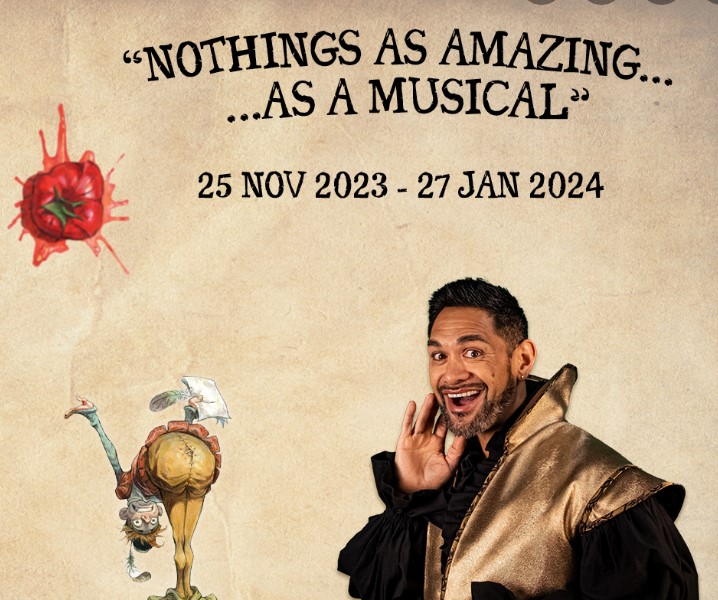
Taking the family’s hard-earned savings, Nick visits a soothsayer, Thomas Nostradamus (Paul Barrett) in an attempt to learn what the ‘next big thing’ in theatre will be, so that the Bottoms can, for once, gazump Shakespeare. No surprises to our audience – it’s the musical. Even better, if Nick can find out what Shakespeare’s biggest success ever will be (Hamlet), perhaps the Bottoms can turn the tables on Shakespeare and get to the story first. Unfortunately, the world of prognostication is not an exact science (or a science at all), and Nostradamus slightly misinterprets Hamlet for Omelette. (But given that he correctly foresees a game of chess and a clowder of cats becoming mega-hits in the future, why not a dozen barn-fresh?) Along the ways are disapproving Puritans, the never-ending drama of securing financial backing, and the women’s rights movement.
From the moment the stunning black and white Tudor-esque illustrated curtains open we can see that this show will be big in every way. It has a huge cast (23 actors) for a Court show and a production crew so extensive that cast don’t even make it onto the programme’s production page.
The creatives rule here. Apparently 75 have been involved in a process that has taken many months. The Court always boasts high production values and hosts clever creativity, and collectively this team have done a stunning job. Directed by Benjamin Kilby-Henson, this show is fast paced, fun and exceedingly ‘extra’, and that is a perfect combo here. The set design by Dan Williams may be monochrome but it’s as far from bland as you can get – it’s black and white sixteenth century-style block-cut flats twist and morph into new facades and sets like a Transformer doll. The lighting (designed by Darren McKane and Giles Tanner) brings it to life and seamlessly transforms scenes in focus, time and mood. The sound (Glen Ruske) is clear and spot on, with sound effects perfectly timed, and the music, led by rockstar musical director Richard Marrett is, predictably, perfectly on point. I enjoy spotting props (Julian Southgate) that subtly give extra smiles, such as the Queen Elizabeth I ‘Like a Virgin’ poster, and the programmes of past Court musicals proudly integrated as part of the chorus action. Kyra Josephson’s choreography is modern, fabulous and joyous. I never imagined I would ever see jazz hands and puffling pants so brilliantly combined!
And the costumes – wow! From the moment the curtains open and we see the ensemble for the first time in their riotously coloured and patterned outfits, you know we are here to party like it’s 1599. They pop against the muted background and add to the fairground, joyous vibe of the show. Tina Hutchison-Thomas and her team apparently made over 400 pieces for 127 major costumes. That alone deserves a round of applause.
When it comes to the cast, Ngaropo’s charisma fills the stage with his knowing, naughty and smug Shakespeare, exuding ‘Willpower’ off the stage and into the audience. He is, simply, brilliant. As the Bottom brothers, Martin and Douglas bring their lovable but unlucky characters to life with energy and humour. I am rooting for unsavvy businessman Nick to make ‘Omelette – the Musical’ work, against the odds, and for naïve slacker-poet Nigel to win his true love. Their respective love interests are Bea, Nick’s proto-feminist wife (Monique Clementson), and puritan Portia (Bianca Paine), who is in love with love and poetry. Paine imbues her with both sweetness and passion, and Clementson is always a stand-out. She throws herself into her role with gusto and shows off once again an incredible voice – strong, clear and beautiful.
Barrett’s canny, confused clairvoyant, perfectly captures both incredulity at what entertainment will look like in the future, and just enough certainty to justify his fee. Cameron Clayton rounds out the leads as the undercover-camp Puritan preacher Brother Jeremiah, who finally fully shines when his pink sequins are revealed.
The ensemble is wonderful, and I am reminded just how talented the entire cast of shows like this must be, to act, sing and dance; and all with only five weeks of rehearsal! Two standouts for me are Ben Freeth, who seems to be constantly onstage in different guises as Shylock, Lord Clapham and in the ensemble (well done to the dressers for all the quick changes!), and Jared Pallesen as Robin/Minstrel. His singing and swooning open the show and sets the perfect tone and high standard for everything that follows.
After two excellent but intense recent musicals (RENT and Next to Normal), it’s nice to have the joy back onstage at The Court Theatre. Something Rotten is fun and fabulous, and you will never see the theatre-world the same once you have witnessed a chorus line of dancing, bejewelled omelettes – unforgettable. If you love Shakespeare and/or musicals, there are dozens of in-jokes to enjoy, but even if you are not a committed fan of either, Something Rotten is so good and such fun that you will still be laughing from start to finish, and humming some new show tunes after you leave.
If you haven’t heard of Many Hats Theatre in Ōtautahi Christchurch, you’re not alone. Neither had I, until I was invited to see their recent production of A Christmas Carol, a riff on the Dickens classic.
Many Hats is a community theatre company of adults with intellectual and learning disabilities first developed by Skillwise in 2013. Supported by a small staff team, the performers are selected by audition and then supported to create a theatrical or film production each year. Many Hats now supports several groups with diverse specialist needs to find the joy of performing in a range of ways and to discover and showcase their own talents, supported by professional creatives from around the city.
First published on Theatreview, 5 December 2023.
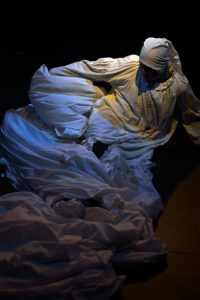
On this particular Saturday afternoon, we are gathered in the small, purpose-built Many Hats Theatre in the central city. About 40 of us prepare to see eight intrepid performers – Michael Finnerty, Peter Rees, Paige Freeman, Benjamin Morris, Ashleigh Smith, Hannah Proctor, Merna Fam and Jillian Vicary – attempt to condense this beloved story into less than 45 minutes. That is quite the challenge.
The set is simple: stark and black, with minimal props which serve to succinctly evoke the scene they represent. Our performing troupe give their all to what is a clever, engaging and very funny (in the right places) rendition of this Christmas favourite. Apart from Michael Finnerty as Scrooge, all the other performers take their moments as individual characters and as part of a general ensemble, morphing from carol singers to crowd members to ghosts with the change of a few simple props. The storyline is kept simple and sharp and delivery is as dry as the ice (and the humour). I thoroughly enjoy it.
What I love most is the unexpected humour brought by the blending of modern pop culture and music references. Scrooge appears, ready to tackle these ghosts, dressed as a ghostbuster (seems appropriate!); the ghosts of Christmas Past are time-travelling Doctor Whos (naturally), complete with Tom Baker scarf; and the ghosts of Christmas Future are Mulder and Scully types, discovering the unexpected, complete with eerie The X Files theme music. This all makes so much sense to me that I wonder why no-one has done it before!
While it seems unfair to single out performers from such a great and committed cast, I must give a special nod to Michael Finnerty for his cat-kicking, urchin-despising and completely unimpressed, and unimpressible, humbug of a Scrooge. Kudos also to Paige Freeman for leading the musical (and dance) ending with ‘Ain’t that just the way’.
I haven’t seen a version of A Christmas Carol quite like this before and now I wonder why other versions need to be so long! I learn everything I need to in this abbreviated retelling, and I tip my single hat to the team of Many Hats for this clever, humorous production. Well done. I’ll be back next year with high expectations.
Review: Ladies' Night
It’s 4pm on a Saturday and I am surrounded by a very large (and soon to be very vocal) local crowd at Christchurch’s James Hay Theatre. It’s a rather glam lot of women (mostly) of differing ages, sipping adult drinks and looking sophisticated for an afternoon at the theatre. That is all about to change.
They’re here with high expectations and energy to match to see New Zealand’s most commercially successful play ever, and one which has scored repeated international sell-out success – Ladies’ Night. Written by Stephen Sinclair and Anthony McCarten in the late 80s, this simple story of six down-on-their-luck Kiwi blokes taking on the world of male stripping has been responsible for many a dignified woman giving in to raptures of whoops and applause, and many men (including local Christchurch lads from the gym I frequented in the 90s) deciding they too had what it takes to form a strip troupe.
First published on Theatreview, 1 October 2023

At 35+ years-old, Ladies’ Night is back, it’s on tour, and it has lost none of its appeal.
I have seen Ladies’ Night twice before – back in the early 90s when it was new, and more recently in 2021. This touring version, directed by Ross McKellar and choreographed by Sonia Hems, includes some well-known names and faces, Mike Edward and Mark Wright in particular. And it is still a bloody fun outing.
The premise is simple – a group of mates find themselves struggling to get work. They are unimpressed that the local lassies would pay good kiwi coin to see foreign blokes covered in fake tan get their gear off – surely there is a business opportunity here? So thinks entrepreneurial Craig (David Ladderman, in place of Jono Kenyon), but he has his work cut out convincing gruff bad boy Barry (Mike Edward), quiet guy Norman (Reid McGowan), conservative rugby-head Wes (Andrew Cornish), and ‘proper’ (but convincible) Gavin (Andrew Ford). Beer-loving sceptic Graham (Mark Wright, who also plays nightclub owner Bernie) taps out early, finding the prospect of baby oil and body wax just too much.
Despite their misgivings, some hilarious misfires as they bring their initial offerings to the ‘dance grass’ outside Barry’s house, and the complete lack of understanding of what women actually want, they book a gig. Under dancer Glenda’s (Julia Guthrey) careful eye and stern tutelage in dance, stripping and women, the (reluctant) Raging Rhinos are born.
The Rhinos are convinced (by Craig, not in themselves) that the regular women who have already chosen guys like them in real life would surely pay to see guys like them on stage and, like their audience in the play, we do. Their characters are certainly relatable because they are everyday blokes and remind us of the local lads we know and love. My friend and I were trying to work out whether the guys we knew where a Barry, Craig or a Norman.
Along the way the story touches on what it (still) means to be a kiwi bloke and the expectations and limitations we all put on ourselves. Will Barry, Craig, Norman, Gav and Wes dare to risk their names, bodies and the way others view them?
What if they fail?
But oh, what if they succeed!
Everyone who has ever faced with a challenge to their own security or identity can relate to that. And speaking of courage, I was full of admiration not only for the fact that these actors put themselves on the line, as all performers do, in getting on stage for us in the first place, but for all the additional work they have put in physically and their willingness to be even more vulnerable – getting nearly naked on stage in front of a large, loud (but supportive) and interactive crowd of women!
Edward’s Barry and Ladderman’s Craig are the two characters who hold sway in various directions over the group, whilst Wright cranks the humour up in both his character guises, but each member of the small and tight-knit cast brings life to their character. They complement each other so well, creating a wonderful team effort that allows everyone to shine in differing ways.
Yes, there were funny, laugh-out-loud moments from each character as we explored manhood and friendship, but let’s not forget “the show” – the strip tease. The dance routines created by Hems and performed by these actors were incredibly vigorous, physical and Fun. It made sense to learn that Reid McGowan (Norman) was a gymnast – wow – but the other men gave him a run for his money with their moves. It was all pulled off slickly, sexily and creatively.
Ladies’ Night doesn’t ask you to think too deeply. It focusses on bringing together multi-talented performers, and promises fun, friendship, sexy vibes and good times; that is what its audience experiences for themselves. It is no wonder that this classic Kiwi play has resonated cross generations, and the world. I didn’t see one person leave the theatre without a smile on their face – and I think that is a pretty great gift to give an audience.
Oh, and Barry, #IamDenise!!
Ladies’ Night is currently on tour throughout New Zealand.
Review: Much Ado About Nothing
In Top Dog Theatre’s third production of Shakespeare to take the Issac Theatre Royal stage, Much Ado About Nothing, director Derek Doddington has dusted off the Bard and repackaged him for a wider, modern audience. There is a lot happening here – sometimes a little too much – but if the reactions of my fellow goers is any indication, it is a success.
For those unfamiliar with the story, Much Ado is a comedy and love story, with some rather dark moments thrown in. We begin as prince Don Pedro (Aaron Boyce) and his soldiers – including Benedick (Will Alexander) and Claudio (Mike Wood) – return home. These last two are the male halves of two possible couples (with Beatrice and Hero, respectively), and each holds wildly differing views of love, women and the merits of both.
First published on Theatreview, 18 August 2023.
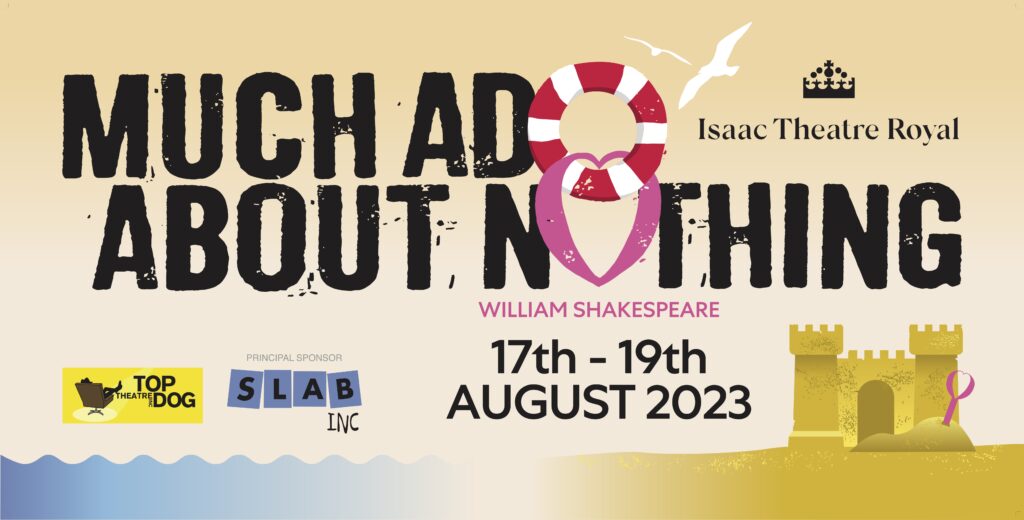
Whilst Benedick and his sparring partner Beatrice (Hester Ullyart) are both decidedly avowed against love forever, Claudio and Hero (Palenque Doddington) are ring shopping almost from the moment their eyes meet. But it wouldn’t be a Shakespearean comedy if there weren’t villains, tears and some raucous belly laughs on the way.
Our setting is largely a private beach, roughly present day, where we encounter the ‘frisbees, ice cream and sunshine’ the Top Dog blurb promised – as well as not one but two quad bikes. I’m sure I wasn’t the only one who experienced some anxiety as they executed a tight turn getting off stage! Subtle use of lighting transformed the set into several indoor spaces and timeframes and the costuming ranged from the simple and modern, to period fabulousness for the masquerade.
Standout was the wonderful Alexander, creating a recognisably Shakespearian Benedick who was still modern, relatable and hilarious. Great diction, comedic timing and the right amount of bravado made his Benedick one you rooted for.
As the object to his scorn/love, Ullyart’s Beatrice was a savvy east-ender (I think!) with a ‘do I look bovvered?’ attitude. She created a Beatrice that many would warm to – a woman not willing to believe the hype regarding anyone or thing, especially men, although I would have loved to hear a ‘yes’ occasionally rather than a ‘yeah’; maybe my old-school Shakespeare sensibilities are just too hard to shake off.
Anna Willows’ Leonata – a character originally written by Shakespeare as a man – was convincing as both a fussing mother, eager to dispose of her daughter in marriage, and a grieving one, enraged at child’s ultimate disposal. A wonderful performance both of comedy and, even more so, grief, in which Willows filled the stage with her rage.
Boyce’s Don Pedro was the seeming voice of calm and reason, an engaging portrayal that hit the mark perfectly. As lovers Hero and Claudio, Doddington and Wood create a pair of overs whose giddiness is all that Shakespeare could have asked for.
They are supported by a very able ensemble who throw themselves (quite literally at times) into this physical and fast-moving interpretation. Shoutouts to Nikki Bleyendaal, whose US-inspired Chief Lifeguard Dogberry was a crowd favourite; Kahlil Qualls’ gleefully wicked Borachio; and Jonty Coulson as Lifeguard 2 for his enthusiastic pre-show and half-time crowd engagement. I had not expected to be taking part in a “I say ‘hey’, you say ‘nonny nonny’” back and forth, but there we were! Heather McFarlane’s clear, beautiful voice and Chris Grueber’s musical versatility on keyboards (onstage during the whole performance) provided the musical magic of the show – kudos to both of them.
Doddington’s interpretation promised to bring Much Ado into the modern world. The somewhat casual delivery of lines, ad libbing and impromptu aside jokes, helped achieve that. There were moments the show bordered on slapstick and could have benefited from a few less distracting gimmicks, but overall this was a vibrant Shakespearean romp, made modern and accessible.
You may walk away slightly bewildered at everything that has just happened on stage, but you will certainly be entertained.
Review: Eve Ruined Everything (Again!)
The Good Times Comedy Club, 19 May 2023.
Comedian Eve Wingerath is, she tells us, a born worrier. She is full of existential anxiety born, in large part, from sharing a name with the woman (or character, depending on your view of the Bible as history or fiction) who has been blamed for humanity’s banishment from the Garden of Eden. That’s quite an inheritance.

This begs the question of how she comes to be standing alone in front of a crowd of 60 or so people in a comedy club small enough to see the whites of your audience’s eyes (or, hopefully, their teeth as they smile) on a cold Friday night in Christchurch.
Promisingly, The Good Times Comedy Club was at capacity, filled with a supportive and vocal crowd who were clearly enjoying Wingerath’s observations on navigating life in the 21st century. Much of her show is personal and autobiographical, but entirely relatable to people not called Eve. Clearly many audience members connected personally with some experiences, most were amused, and not a few of us were horrified at least once (the manufacturers of the Mirena IUD need to take a long look at themselves).
I had seen Wingerath ‘ruin everything’ in mid-2022 and she has clearly spent her time honing her routine and her ‘gags’ (an in-joke for those who’ve seen the show), with nerves and anxiety as banished as her namesake. She has even clocked up a few awards that recognise her as an up-and-coming comedian on the local comedy scene. Clearly, this Eve has not ruined everything.
The principal test that matters for a stand-up comedy show is, was it funny? My personal take, echoed (loudly) by many others, was yes, it was. From the vocal and uninhibited laughter to the spontaneous applause, this performance was a success.
I can recommend catching Wingerath’s show if you need advice on learning new sexual techniques, are contemplating a future in the wellness industry, or if you just want to spend an hour laughing at the dilemma of trying to exist, yet do no harm to anyone or anything, in the modern world. And if Wingerath decides comedy is not for her, she has identified a dating app just begging to be trademarked.